
The Best Time of Year to Paint a House Exterior in Massachusetts
· By Lucas Souza
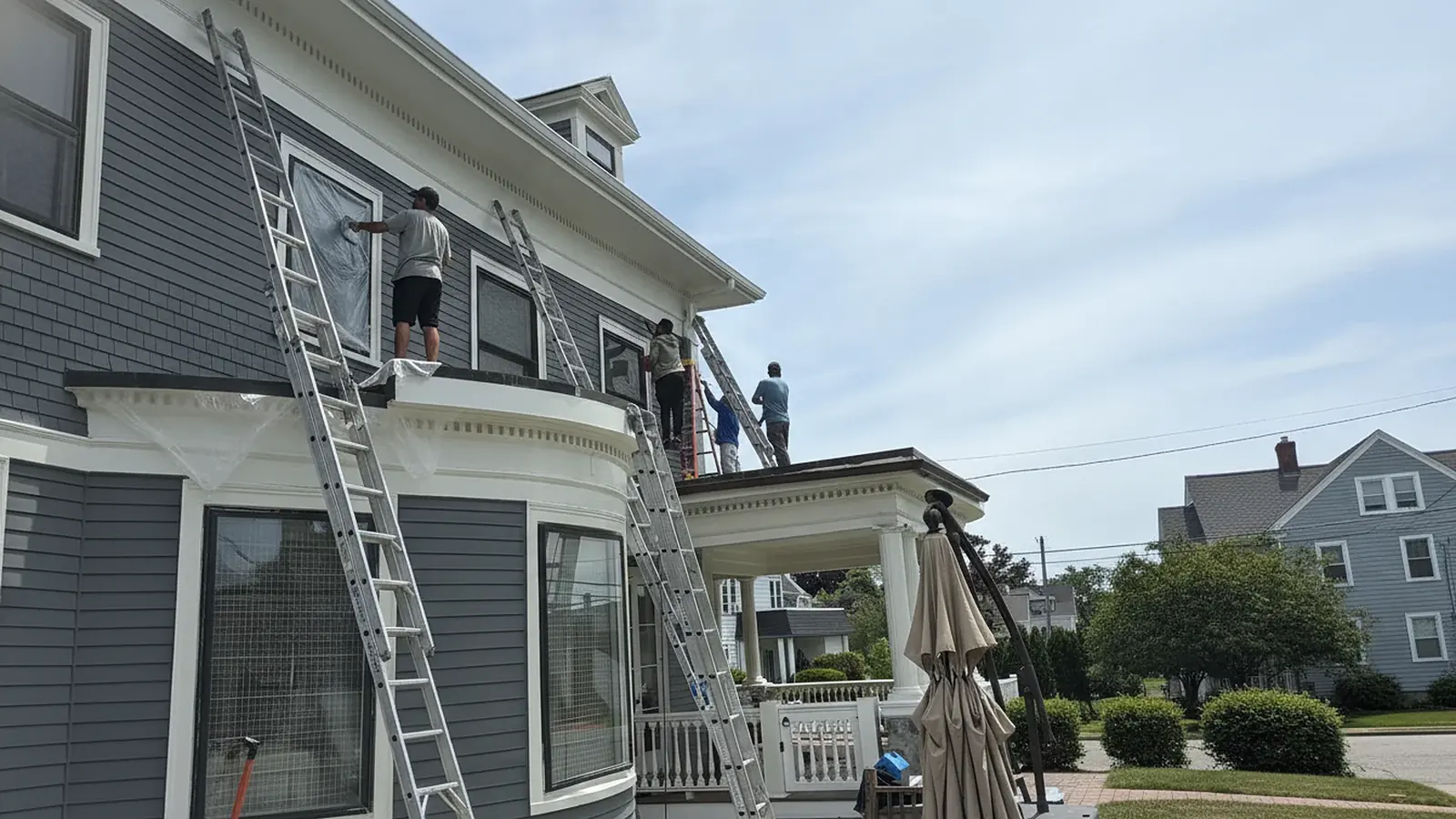
Exterior paint does not just need to go on. It needs to dry and cure in the right conditions, and in Massachusetts those conditions only line up for part of the year. Paint applied on a cold, damp day can look fine at first and then fail early with poor adhesion, surfactant streaks or mildew.
Here is how to think about timing an exterior paint job in Greater Boston, what the paint can actually tolerate, and why the calendar is only half the story.
The short answer: late spring to early fall
For most of Eastern Massachusetts, the reliable exterior painting window runs from roughly mid to late May through late September or early October. Inside that window, daytime temperatures are usually comfortable, nights are warm enough for paint to keep curing, and long days give surfaces time to dry after morning dew.
Early June and September are often the sweet spots. The heat is moderate, humidity is lower than in midsummer, and the weather tends to be more stable. July and August work well too, but high heat and afternoon thunderstorms need planning around.
Temperature: read the can, then add a margin
Most exterior paints list a minimum application temperature on the label, commonly around 50 degrees Fahrenheit for many standard products, and some modern formulas go lower. That minimum applies to both the air and the surface, and it needs to hold while the paint dries, not just at the moment it goes on.
In practice that means watching overnight lows. A 62 degree October afternoon followed by a 38 degree night is not a good painting day, because the film is still soft when the temperature drops. Siding in shade can also be several degrees colder than the air, which is why north walls are painted later in the day.
Too hot is a problem as well. Painting in direct midsummer sun on dark siding can make paint dry too fast, leaving lap marks and weaker adhesion. Good crews follow the shade around the house, painting each side after the sun has moved off it.
Dew point and humidity
Dew point is the temperature at which moisture condenses on surfaces. If the surface temperature is close to the dew point, water can form on fresh paint, especially in the evening. A common rule of thumb in the trade is to keep the surface at least five degrees above the dew point while painting and during early drying.
Near the coast, in places like Winthrop and South Boston, morning dew and sea fog can keep siding wet well into the morning. That is why exterior crews often start a little later on those days and stop early enough for paint to set before evening moisture returns.
High humidity also slows drying. Latex paint that stays wet too long can develop surfactant leaching, a sticky tan or brown residue that shows up after a damp night. It usually washes off, but it is a sign the timing was tight.
Rain, nor'easters and fall weather
Most exterior paints need a dry period of several hours after application before rain, and more before heavy rain. Summer pop-up storms can usually be planned around by watching radar and working the protected sides first.
Fall is trickier. Nor'easters can bring several days of wind and rain, and each storm pushes back a schedule that is already running into shorter days and colder nights. By mid October, many good painting days are only good for a few afternoon hours. If you want the whole house done, not half done before winter, plan for earlier in the season.
What a good painting day looks like in practice
On a typical summer job in Greater Boston, the crew checks the forecast the night before and again in the morning. If the siding is still wet with dew, the day starts with prep on dry sides, trim work under porches, or masking, and brushes and rollers only come out once surfaces are dry to the touch.
Painting then follows the sun. East walls are painted in the afternoon after the morning sun has passed, west walls in the morning, and south walls early or late in the day. Work stops early enough that the last coat has a few hours to set before evening dew. It sounds slow, but it is how you get paint that stays bonded for years instead of a job that looks good for one season.
Why booking early matters
Because the window is short, experienced exterior crews in Greater Boston tend to fill their summer schedules in late winter and spring. Homeowners who call in March or April get more choice of dates than those who call in August.
Booking early also leaves time for prep work that needs dry weather, such as power washing a few days ahead, replacing rotted boards and letting new wood acclimate. Rushed exterior jobs are where corners get cut.
At L&D Painting we paint exteriors across Greater Boston, from Winthrop to Lexington and Belmont, and we plan each day around the weather rather than forcing a schedule. If you are thinking about next season, request a free estimate now and we will walk the house, talk timing and get you on the calendar.
Frequently asked questions
- Can you paint a house exterior in October in Massachusetts?
- Sometimes, especially early in the month. The limit is overnight temperature and morning dew, not just daytime highs. Late season work needs shorter painting hours and products rated for lower temperatures.
- What is the minimum temperature to paint outside?
- Many standard exterior paints list around 50 degrees Fahrenheit for both air and surface, and some are formulated to go lower. Always check the product label and make sure the temperature holds overnight while the paint cures.
- Is summer too hot to paint a house?
- Not usually in Massachusetts, but direct midday sun on dark siding can cause fast drying and lap marks. Crews work each side of the house when it is in shade.
- How long does exterior paint need before rain?
- Many products need several hours of dry weather to resist light rain, and full cure takes days to weeks. Painters watch the forecast and hold off when rain is expected soon after application.
- When should I book an exterior painter in Boston?
- Late winter or early spring gives you the most scheduling choice for the late spring through early fall painting window.
Related services
Found this helpful? Make us a preferred source on Google.
Ready for an exact price?
Get a free, no-pressure in-home estimate. Real numbers for your home, not a phone guess.