
Kitchen Cabinet Painting vs Refacing vs Replacing: What to Know
· By Lucas Souza
Dated oak or cherry cabinets are one of the most common reasons homeowners around Boston start thinking about a kitchen remodel. Before you price new cabinets, it is worth knowing that solid cabinet boxes can often be painted to look new, for a fraction of replacement cost and without weeks of demolition.
This guide compares painting, refacing and replacing, then walks through what a proper cabinet paint job actually involves. The difference between a finish that lasts and one that chips in a year is almost all in the prep.
Painting vs refacing vs replacing
Painting keeps your existing boxes and doors and changes the color and finish. It makes sense when the cabinets are structurally sound, the layout works for you and you mainly dislike the look. It is typically the least expensive of the three options by a wide margin.
Refacing covers the existing boxes with a new veneer and replaces the doors and drawer fronts. It changes the door style as well as the color, and it usually costs noticeably more than painting but less than new cabinets. It is a good fit if you want a different door profile but the boxes are fine.
Replacing is the right call when boxes are water damaged, sagging or poorly built, or when you want a new layout. It is the most expensive and disruptive option, and it usually brings new countertops into the project too.
Which cabinets are good candidates for paint
Solid wood and good quality painted or MDF cabinets are the best candidates. Oak paints well, although its open grain will show through unless it is filled first, which is a choice you should make up front. Thermofoil or laminate cabinets are harder, since paint does not bond well to those surfaces without specialized primers, and peeling thermofoil is a sign to consider refacing or replacing instead.
Check for water damage under the sink, swollen edges on doors and loose hinges. Those need repair before painting. Paint will not fix a structural problem.
It is also a good moment to think about hardware. New knobs and pulls are an easy upgrade, but if the new hardware uses different hole spacing, the old holes need to be filled before painting, not after.
The prep process, step by step
Step one is removing doors, drawer fronts and hardware, and labeling everything so it goes back in the same place. Step two is cleaning and degreasing. Kitchen cabinets carry years of cooking grease and hand oils, especially around handles, and paint will not stick to it. A proper degreaser, followed by a rinse, is essential.
Step three is sanding to scuff the existing finish so primer can grip, then removing all dust. Dents and gouges get filled, and if you want a smooth look on oak, grain filling happens here. Step four is a bonding primer suited to the surface, which is what keeps the finish from peeling off glossy factory coatings.
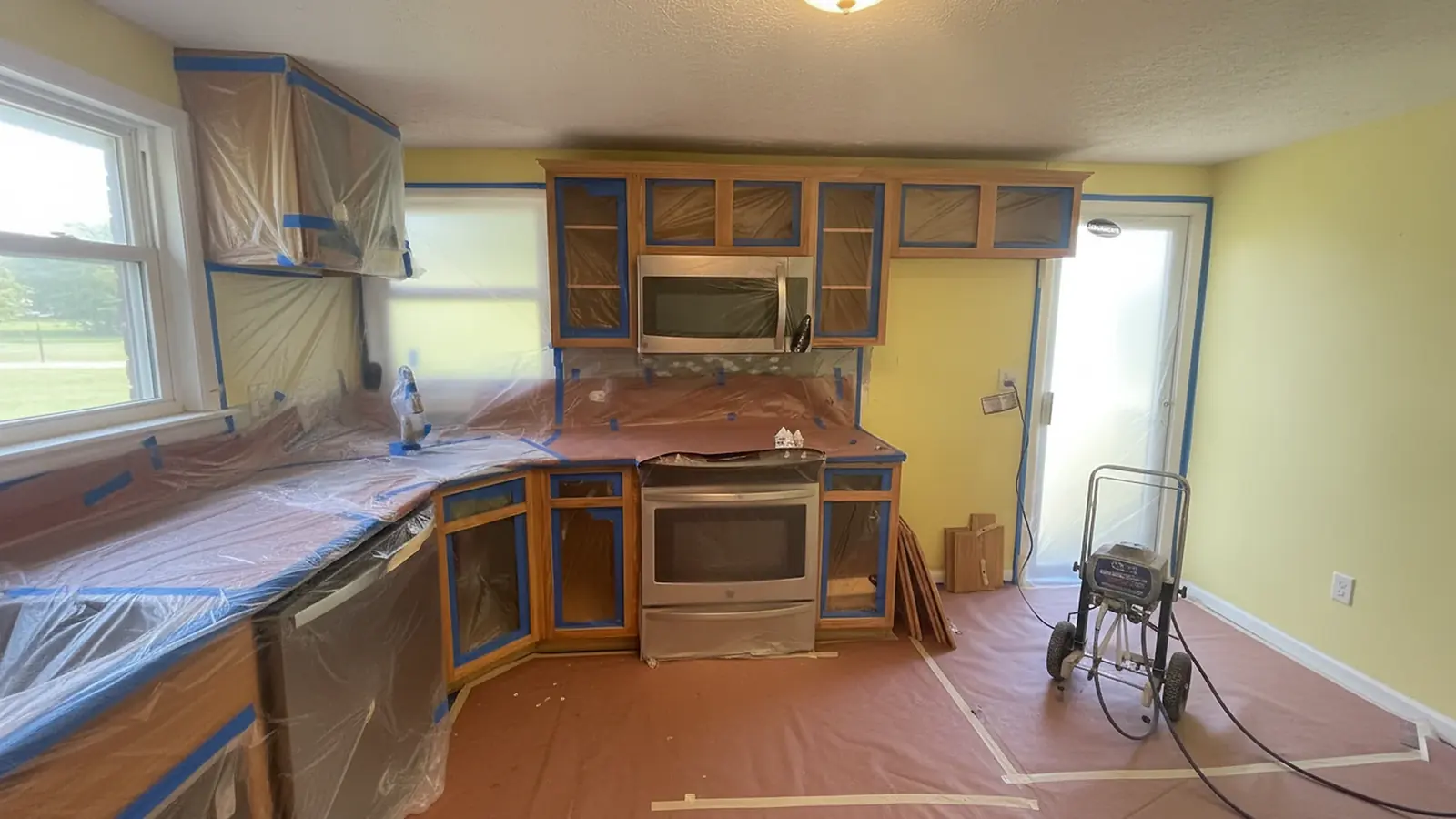
Step five is the finish. We spray-finish cabinets and built-ins, which gives a smooth, even surface without brush marks. Doors and drawer fronts are usually sprayed in a controlled area, and the cabinet boxes are sprayed in place after the kitchen is fully masked.
Masking counters and protecting the kitchen
Spraying in a kitchen means everything that is not being painted gets covered: countertops, backsplash, appliances, floors, windows and nearby walls. Plastic sheeting and masking paper create a sealed work zone so overspray stays where it belongs.
This setup takes real time, and it is one reason cabinet painting is priced as its own project rather than as part of wall painting. It is also what keeps your counters and floors clean when the plastic comes down.
Durability and what to expect
A properly prepped and sprayed cabinet finish is durable, but it is still paint. It needs time to cure fully, often a few weeks, before it reaches full hardness. During that time, be gentle: avoid scrubbing, and do not hang wet towels over doors. After curing, normal cleaning with a soft cloth and mild cleaner is fine.
Expect some wear over the years at high-touch spots like the edges near the sink and trash cabinet. Touch-ups are simple if you keep a little of the finish. Soft-close bumpers on doors and drawers also help, since they keep painted edges from knocking together every time the kitchen is used. A cabinet paint job typically takes several days to a week or more depending on the number of doors, and you can usually use the kitchen in a limited way during the process.
Deciding and getting a price
If your cabinets are solid and you like the layout, painting is usually the best value. If you want a different door style, look at refacing. If there is damage or you want a new layout, replacement is the honest answer.
At L&D Painting we spray-finish kitchen cabinets and built-ins as part of our interior painting work across Greater Boston, from Winthrop and Boston to Newton and Lexington. We will look at your cabinets, tell you if they are good candidates for paint, and give you a free estimate with no visit fee.
Frequently asked questions
- Is painting kitchen cabinets worth it?
- When the boxes are solid and the layout works, painting usually delivers the biggest visual change for the cost. It is not a fix for water damaged or failing cabinets.
- How long does painted kitchen cabinetry last?
- With proper degreasing, sanding, bonding primer and a sprayed finish, painted cabinets can hold up for many years with normal care. High-touch edges may need occasional touch-ups.
- Can you paint oak cabinets without the grain showing?
- Oak grain will show through paint unless it is filled first. Grain filling adds time, so decide up front whether you want a smooth look or a visible texture.
- Can I use my kitchen while cabinets are being painted?
- Usually in a limited way. The kitchen is masked while boxes are sprayed, and doors are finished separately. Your painter should plan the schedule with you.
- Why are cabinets sprayed instead of brushed?
- Spraying gives a smoother, more even finish without brush marks, closer to a factory look. It requires careful masking of counters, appliances and floors.
Related services
Found this helpful? Make us a preferred source on Google.
Ready for an exact price?
Get a free, no-pressure in-home estimate. Real numbers for your home, not a phone guess.