
Painting a Lexington, MA Home: From Historic Colonials to Mid-Century Moderns
· By Lucas Souza
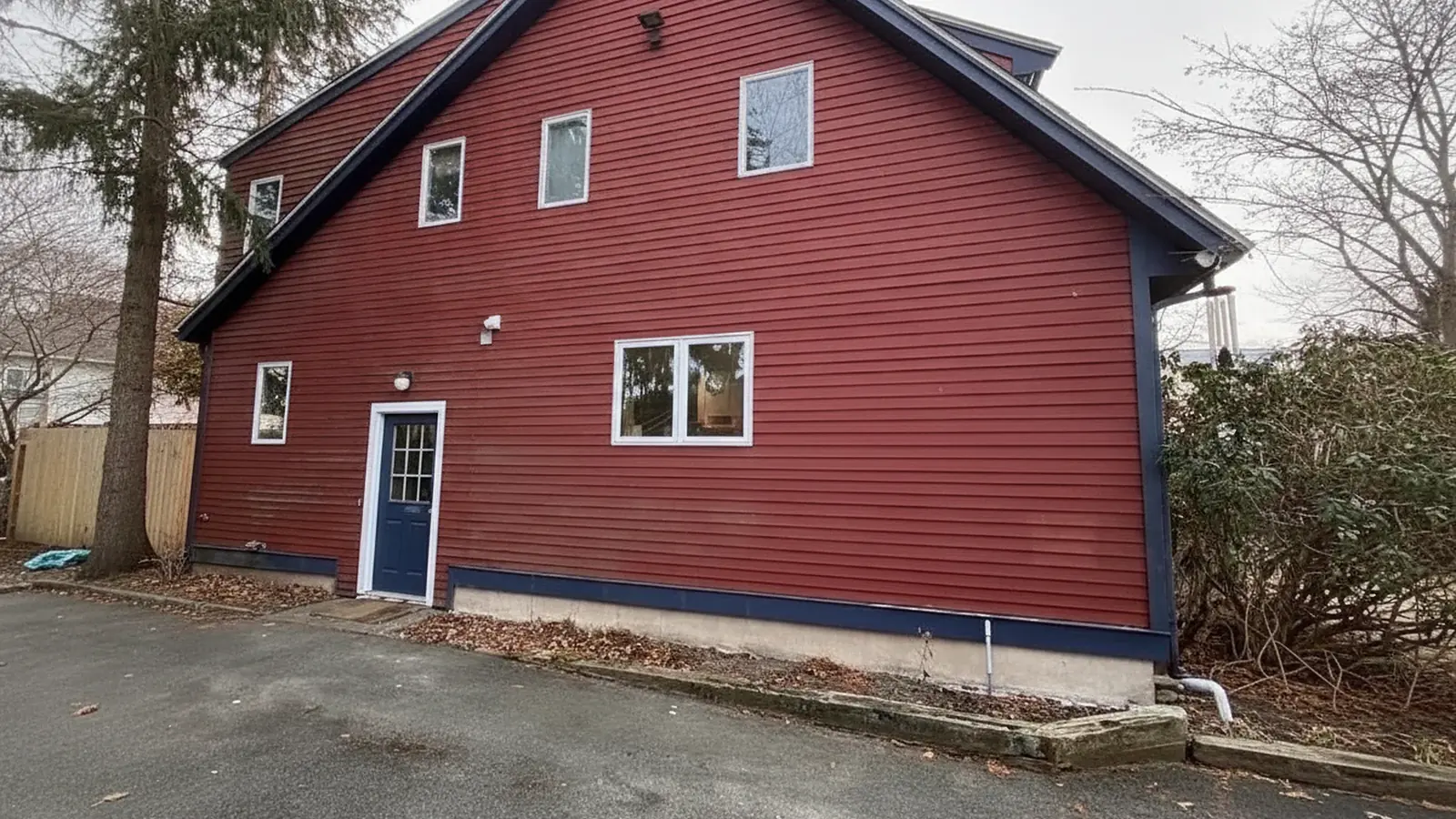
Few towns around Boston have housing as varied as Lexington. Within a short drive you can go from eighteenth century homes near the Battle Green to flat-roofed modernist houses tucked into the woods off Concord Avenue and Route 2. Painting either type well takes knowledge that does not transfer automatically from one to the other.
This guide covers both: how to approach an older Colonial near Lexington Center, how to care for a mid-century modern in neighborhoods like Five Fields, Six Moon Hill and Peacock Farm, and what to check with the town before you change the outside of a historic property.
Historic homes around Lexington Center and the Battle Green
The streets around Massachusetts Avenue, the Battle Green and Lexington Center hold a concentration of older homes: Georgian and Federal era Colonials, Greek Revival houses and later Victorians. Many have original clapboard, wide corner boards, multi-pane windows and paneled doors. The wood on these houses is often old growth and very durable, but it has usually been painted many times, and older layers can be brittle.
The key with these homes is preparation. Loose and failing paint has to come off, bare wood needs a suitable primer, and window sashes and sills (the areas that take the most weather) usually need the most attention. Glazing putty on old windows is often cracked, and replacing it before painting keeps water out of the sash.
Nearly all of these houses were built before 1978, so lead paint should be assumed. Federal EPA rules require lead-safe work practices when contractors disturb painted surfaces on pre-1978 homes, including containment, dust control and careful cleanup. Ask any contractor how they plan to meet those rules on your house.
Lexington Historic Districts Commission: what to check first
Lexington has several local historic districts, including areas around the Battle Green, Hancock-Clarke, East Village and Munroe Tavern. The Lexington Historic Districts Commission reviews certain exterior changes to buildings within those districts. In many Massachusetts local historic districts, simple repainting is handled differently from changes to materials, windows or architectural details, but the exact rules for paint color and other work depend on the district and the commission's current guidelines.
Before planning exterior work on a home that may be in a district, contact the Lexington Historic Districts Commission or the town's Planning Office and ask what, if anything, requires a certificate. It is much easier to get an answer upfront than to stop a project halfway through. If you are replacing rotted trim, ask whether a matching profile in the same material is expected.
Five Fields, Six Moon Hill and Peacock Farm: Lexington's modernist neighborhoods
After World War II, a group of architects and families built some of the best known mid-century modern neighborhoods in New England right here in Lexington. Six Moon Hill was developed by members of The Architects Collaborative, and Five Fields followed with a similar philosophy. Peacock Farm is known for houses designed by Walter Pierce. These homes share features that matter for paint: flat or low-pitched roofs, vertical board or flush siding, large sheets of glass, exposed beams and a close connection to wooded lots.
Many of these houses were originally finished with stains or very muted colors meant to blend into the trees. Owners today often want to keep that look. That changes product choice. A solid or semi-transparent stain behaves differently from paint: it soaks into the wood instead of forming a thick film, it usually shows less peeling, and it needs recoating on a different schedule. Switching a stained house to paint is possible but it is a one-way decision in practice, so it is worth thinking through.
Some of these neighborhoods also have their own neighborhood associations or informal design norms. They are not the same as the town's historic district rules, but it is courteous and smart to know what your neighbors expect before changing a house's color scheme dramatically.
How to paint or stain a mid-century modern properly
Flat, vertical siding shows every flaw. Lap marks, uneven sheen and brush strokes that would disappear on clapboard are obvious on a smooth flush board wall. That means working in full, continuous sections, keeping a wet edge, and planning around sun so the finish does not dry too fast on one part of the wall.
Large glass areas require careful masking and clean cut lines. Exposed beam ends that extend past the roofline catch water and are often where rot starts, so they deserve close inspection and sealing. Low-slope roofs and minimal overhangs mean the siding gets more direct rain than on a Colonial with deep eaves, which shortens coating life on the weather side.
Wooded lots add moisture and mildew, just like in Newton or Weston. A gentle cleaning and full drying time before any stain or paint goes on is non-negotiable. Interior work on these houses often involves wood paneling, open plans with long sight lines, and clerestory windows, all of which call for careful sequencing so rooms stay usable while the work moves through.
Choosing a season and planning the project
Exterior work in Lexington follows the usual Greater Boston season, roughly May through October, with dry days and temperatures above the coating's minimum. Stains and paints both need a dry surface, so a wooded modern house may need a few sunny days in a row after a rainy stretch before work can start.
If you own a historic home, build in time to ask the commission any questions before your preferred start date. If you own a modern, decide early whether you are keeping a stain finish or switching to paint, because that changes the prep, the product and the maintenance cycle for years to come.
When you are ready to talk through your Lexington home, whether it is a Colonial near the center or a modern in the woods, L&D Painting offers free estimates with no visit fee and replies within an hour during business hours.
Frequently asked questions
- Should I paint or stain my mid-century modern house in Lexington?
- Many owners keep stain because it matches the original design and tends to wear by fading rather than peeling. Paint gives more color options and a more uniform look but usually needs more prep at each recoat. Moving from stain to paint is easy; going back is hard.
- Does the Lexington Historic Districts Commission regulate paint colors?
- It depends on the district and current guidelines. Contact the commission or the town Planning Office before exterior work on a home in a historic district, particularly if you are changing trim, windows or materials.
- What are the most common problem areas on old Lexington Colonials?
- Window sills and sashes, the bottom courses of clapboard near the ground, and trim under gutters that overflow. These spots take the most water and usually need scraping, priming and sometimes wood repair before paint.
- Can interior painting be done in winter?
- Yes. Interior painting works year round, and winter is often the easiest time to schedule. Good ventilation and a heated house are all that is needed.
Related services
Found this helpful? Make us a preferred source on Google.
Ready for an exact price?
Get a free, no-pressure in-home estimate. Real numbers for your home, not a phone guess.