
Power Washing Before Painting: Why It Matters and How to Do It Safely
· By Lucas Souza
Paint sticks to whatever is on the surface. If that surface is covered in pollen, road grime, chalky old paint or mildew, the new coat bonds to the dirt instead of the siding, and it starts to peel far sooner than it should. That is why washing is one of the first steps on almost every exterior painting job.
Power washing before painting sounds simple, but done carelessly it can force water into walls, gouge soft wood and spread lead dust from old paint. This guide explains why washing matters, the difference between pressure washing and soft washing, how long to wait before painting, and what to leave alone.
Why wash a house before painting
Exterior surfaces in Greater Boston collect a lot: salt air near the coast, exhaust from busy streets, tree sap and pollen in spring, and dust from nearby construction. Old paint also breaks down into a chalky powder over time. You can test for chalk by rubbing a dark cloth on the siding. If it comes away white or colored, the surface needs cleaning before anything goes on it.
Washing also reveals problems. Once the dirt is gone, it is easier to see cracked caulk, loose paint, soft wood and spots where water has been getting in. That makes the scraping and repair stage more accurate, and it gives the painter a clean surface to judge.
Pressure washing vs soft washing
Pressure washing uses high water pressure to blast dirt away. It works well on concrete, brick in good condition and hard surfaces that can take it. On siding and trim, high pressure can do more harm than good: it can split wood grain, drive water behind clapboards and into wall cavities, and break window seals.
Soft washing uses lower pressure combined with a cleaning solution that loosens dirt and kills mildew, followed by a gentle rinse. For most painted wood, vinyl and fiber cement siding on New England homes, soft washing or low-pressure washing is the safer choice. The goal is a clean surface, not a stripped one. Stripping paint is a separate step done with scrapers and sanders, not with a water jet.
Technique matters as much as pressure. Spraying downward along clapboards, keeping a safe distance and never aiming up under laps or directly at vents and window edges keeps water where it belongs.
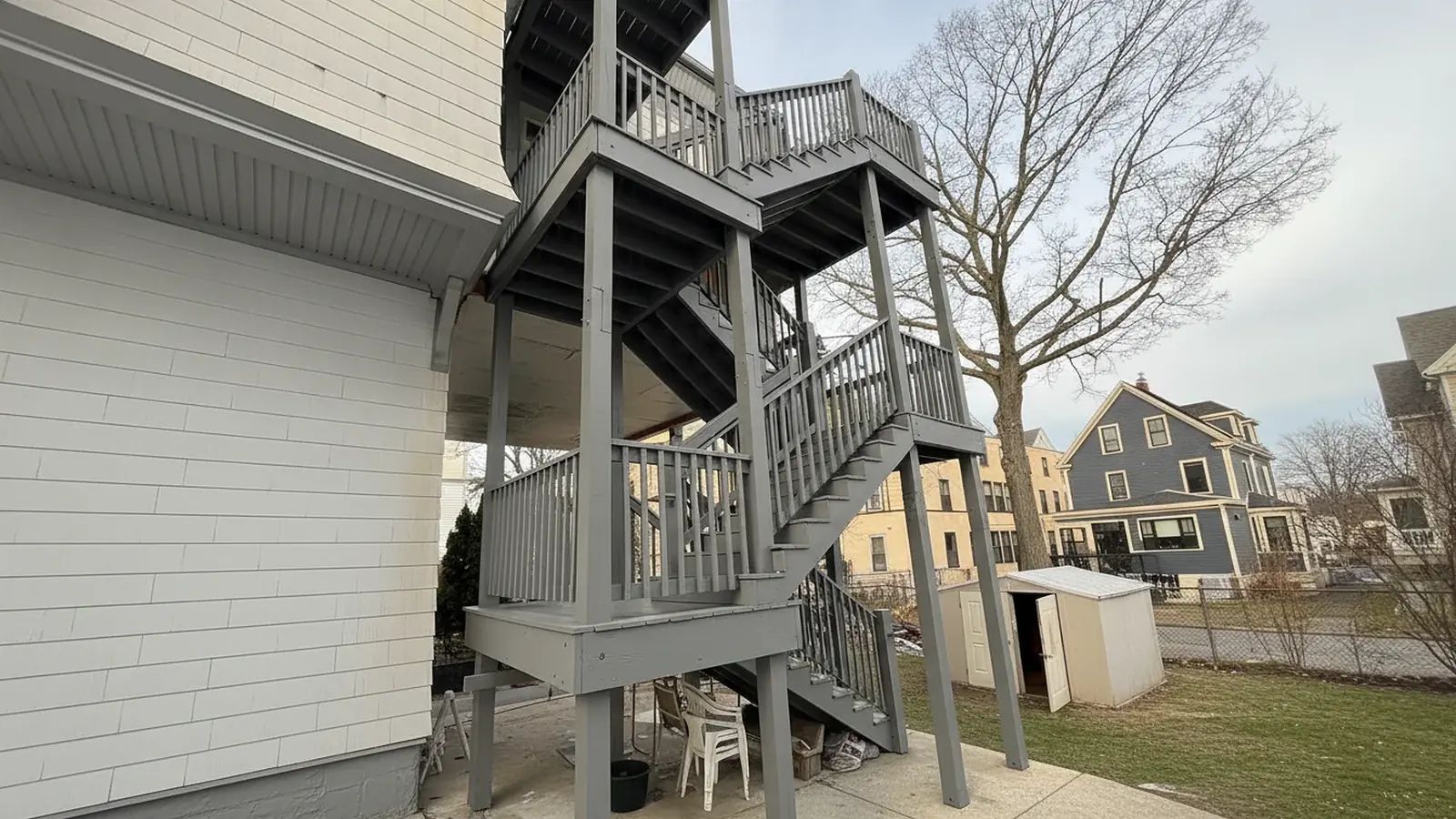
Surface type changes the approach too. Vinyl siding cleans easily at low pressure but can warp or crack if hit hard up close. Cedar shingles, common on older New England homes and coastal properties, are soft and absorb water, so they need a gentle rinse and extra drying time. Fiber cement handles cleaning well but still should not be sprayed upward into its joints. Painted brick and stucco can hide cracks where water gets in, so those areas need a careful look before and after washing. Decks and porch floors, which take the most foot traffic and weather, often need the most thorough cleaning before they are repainted.
How long to wait before painting
Wood absorbs water during washing, and paint applied over damp wood can blister or fail to bond. A common rule of thumb is to allow at least a day or two of dry weather before painting, and longer after cool, humid or cloudy days. North-facing walls and shaded areas under porches dry slowest.
Painters often check with a moisture meter rather than guessing. On a typical New England exterior, the schedule usually looks like this: wash, let it dry, scrape and repair, prime bare spots, then paint. Building those drying days into the plan is one reason exterior jobs take longer than homeowners expect.
What not to blast, including older paint
Some surfaces should never see high pressure. Old, weathered wood can be gouged and fuzzed. Windows, especially older single-pane sashes, can crack or lose glazing. Soft mortar in older brick can wash out. Light fixtures, outlets, vents and meters should be covered or avoided.
Homes built before 1978 may have lead paint on siding, trim and porches, and many houses around Boston are much older than that. Blasting lead paint can scatter chips and dust into the yard, the soil and neighboring properties. Federal and Massachusetts rules generally require lead-safe work practices by certified firms when painted surfaces in these homes are disturbed. If your home is older, ask about testing and review the EPA and state guidance before any washing or scraping starts.
Dealing with mildew and green growth
Shaded sides of a house, surfaces near trees and porches with little sun often grow mildew and algae. Painting over it seals the growth in, and it can come back through the new finish. A proper wash uses a cleaner that kills mildew, not just water that moves it around.
After cleaning, look at why the growth was there. Overhanging branches, clogged gutters that spill onto the siding and shrubs pressed against the walls all keep surfaces damp. Trimming back plants and keeping gutters clear help the new paint stay clean longer. If you want washing and painting planned as one job, we offer power washing and exterior painting together, and a free estimate is the easiest way to see the full plan for your house.
Frequently asked questions
- Do you have to power wash a house before painting?
- Almost every exterior needs cleaning before paint. Whether that means low-pressure washing, soft washing or hand cleaning depends on the siding and the age of the paint.
- How long after power washing can you paint?
- Usually at least a day or two of dry weather, and longer after cool or humid days. Shaded walls dry slowest. A moisture meter gives the most reliable answer.
- Can power washing damage siding?
- Yes. High pressure can split wood, force water behind siding and break window seals. Lower pressure with a cleaning solution is safer for most siding.
- Is it safe to power wash an old house with lead paint?
- Blasting lead paint can spread chips and dust. Homes built before 1978 may contain lead paint, and work that disturbs it generally requires lead-safe practices by certified firms. Check EPA and Massachusetts guidance first.
- Does washing remove mildew permanently?
- A cleaner that kills mildew removes it, but it can return if the area stays damp. Trimming plants and keeping gutters clear help prevent regrowth.
Related services
Serving
Found this helpful? Make us a preferred source on Google.
Ready for an exact price?
Get a free, no-pressure in-home estimate. Real numbers for your home, not a phone guess.