
8 Signs Your House Needs Repainting (Inside and Out)
· By Lucas Souza
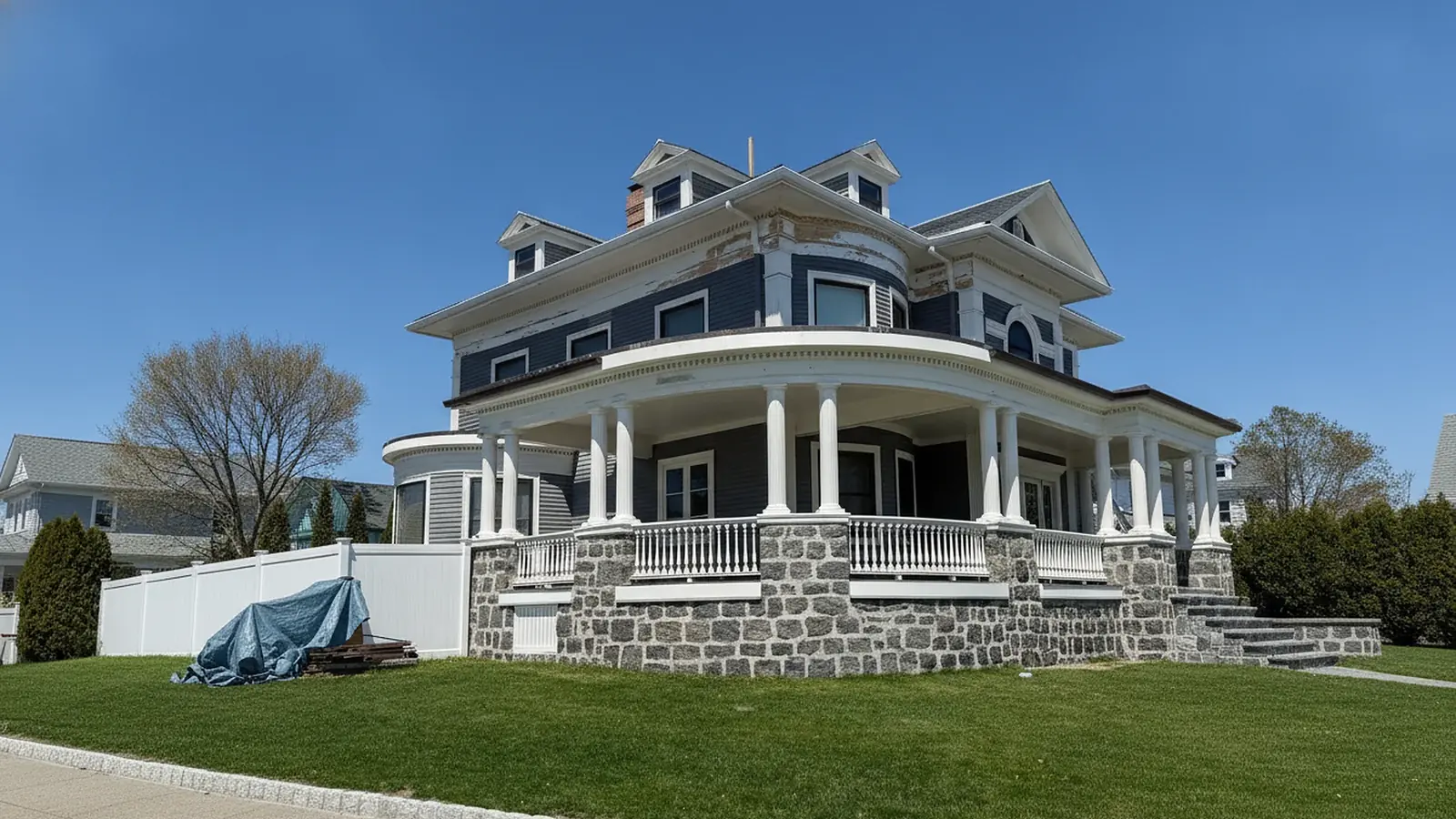
Paint is the first layer of protection between your house and New England weather. When it starts to fail, the damage underneath grows quietly until a simple repaint turns into wood repair. The good news is that paint gives clear warning signs if you know what to look for.
Here are the most common signs, what each one means, and how urgent it is. Take a walk around your home on a dry day and check each side, because the south and north walls often tell very different stories.
1. Peeling, flaking or blistering paint
Peeling is the most obvious sign and the most important one. When paint lifts, water gets behind it and into the wood. Peeling usually starts at bottom edges of clapboards, window sills, porch railings and anywhere water collects.
Blistering, small bubbles in the paint, often points to moisture pushing out from inside the wall or to paint applied in direct heat. If you see peeling in one area only, look for a moisture source nearby, like a clogged gutter, a leaking downspout or a bathroom vent.
In pre-1978 homes, peeling paint may contain lead. Do not dry-scrape it yourself, and hire a contractor who follows lead-safe work practices required by federal and Massachusetts rules.
2. Chalking and 3. fading
Rub your hand across the siding. If it comes away with a powdery residue, the paint is chalking. Some chalking is normal as paint ages, but heavy chalking means the binder is breaking down and the film is thinning. Painting over chalk without washing it off first leads to poor adhesion.
Fading shows up most on south and west walls that take the strongest sun. Color loss by itself is mostly cosmetic, but it usually travels with chalking and a thinner, less protective coating. If one side of your house looks noticeably lighter than the others, the paint there is aging faster.
4. Cracked or missing caulk and 5. soft or rotting wood
Caulk seals joints around windows, doors, corner boards and trim. When it cracks, shrinks or pulls away, water gets straight into the joints. Failed caulk is one of the cheapest problems to fix and one of the most expensive to ignore.
Press gently on window sills, the bottom of door trim, porch floors and the ends of boards with a screwdriver. If the wood feels soft or spongy, or you see dark staining and crumbling, there is rot. Rotted wood needs to be cut out and replaced before painting. Paint over rot only hides it for a season.
6. Mildew and 7. cracking
Dark spots or streaks, especially on north-facing walls and under trees, are often mildew. A quick test is a drop of diluted bleach: mildew usually lightens, dirt does not. Mildew needs to be cleaned and killed before painting, often as part of a careful power wash, or it will grow back through the new paint.
Fine cracks in a pattern, sometimes called alligatoring or checking, mean the paint film has become brittle and can no longer flex with the wood. It often happens with many layers of old paint. Cracked paint usually needs more thorough scraping and sanding before repainting.
8. Interior signs: scuffs, stains and worn trim
Inside, the signs are less about protection and more about wear. Scuffs that do not wash off, marks along hallways and stairwells, yellowed or chipped trim, and stains that bleed through old paint all say a room is due. Water stains on ceilings need the leak fixed and a stain-blocking primer before paint.
Flat paint in high-traffic areas tends to show wear first, since it is harder to clean. When you repaint, a more washable finish in hallways, kitchens and kids' rooms can stretch the time until the next job.
How to do a quick self-inspection
Pick a dry, bright day and walk the full outside of the house slowly, starting on the south side where sun damage shows first. Look up at the fascia and soffits, then at the window sills and the lowest rows of siding, where water splashes back from the ground. Take photos of anything that concerns you so you can compare year to year.
Check the porch, too. Porch floors, stair treads and railings take the most wear and are often the first to show bare wood. On the inside, look closely at the stairwell, hallway walls and door trim, where hands and bags rub every day. Ten minutes of looking twice a year is usually enough to catch problems while they are still small.
When to call a painter
One or two small issues can often be handled with spot repairs and touch-ups. Call a painter when you see peeling on more than a few boards, soft wood, widespread caulk failure, or when one full side of the house is chalking and faded. Catching problems while the paint is mostly sound keeps prep lighter and the result longer lasting.
At L&D Painting we look at the whole house and tell you what actually needs doing, whether that is a full repaint, one or two exposed sides, or just caulk and touch-ups. We serve Greater Boston, including Boston, Winthrop and Cambridge, with free estimates and no visit fee. Request an estimate and we will walk the house with you.
Frequently asked questions
- How do I know if my house needs to be repainted?
- Look for peeling, chalky residue on your hand, faded sunny walls, cracked caulk and soft wood. Any of those on a large area means the paint is no longer protecting the house.
- Is peeling paint dangerous?
- It can be in homes built before 1978, since older layers may contain lead. Do not dry-scrape or sand it yourself. Use a contractor who follows the required lead-safe practices.
- Can I just paint over peeling or chalky paint?
- No. Loose paint must be scraped and sanded, and chalk must be washed off, or the new paint will fail early.
- What does mildew on siding mean?
- It usually means the surface stays damp, often on shaded north walls. It needs to be cleaned and treated before painting or it will return.
Related services
Found this helpful? Make us a preferred source on Google.
Ready for an exact price?
Get a free, no-pressure in-home estimate. Real numbers for your home, not a phone guess.